
New York County Busted Mugshots
Manhattan has no county lockup of its own. The NYPD writes up the initial arrest record instead. The city's Department of Correction runs the jails and the public inmate lookup. Someone picked up by NYPD might get released with a desk appearance ticket or summons. Or that person lands in DOC custody later on. Local structure matters more here than a generic county-jail search.
Booking photos are not public gallery items in this jurisdiction. DOC has said flatly that it does not supply mugshots. NYPD may hold arrest-processing material, though privacy, safety, investigation, fair-trial, and sealing rules can all limit access. What an arrest record shows is one event on one date. The court file tells the rest of the story.
Important: Confirm the final court result before drawing any conclusion from an initial charge, custody entry, or news report.
New York County Booking Records
No single public file ties everything together. A DOC result covers custody details. NYPD open data describes the arrest event itself. Once a case enters the courts, the court record takes over. Keep the three sources straight. An NYPD arrest date, for example, is not the same thing as a DOC intake time, and a data-table ARREST_KEY will never match a DOC Book and Case Number.
| Field | What the official source may show |
|---|---|
| Name, NYSID, Book and Case Number | DOC identifiers used to search or clarify a custody result. |
| Charges and bail or bond | DOC custody information that can change and does not decide the case. |
| Court date and location | A scheduled court field, not a final disposition. |
| Holding location and release date | Time-sensitive city-jail information. |
| ARREST_KEY, precinct, law code | NYPD event-data fields, distinct from DOC booking identifiers. |
Expect blank fields. DOC offers no public photo field at all. The NYPD open datasets leave out names and photographs. A blank result can mean timing, custody state, a protected matter, or the limits of that source. It is never a complete statement about a person or a case.
New York County FOIL Records
NYPD-held arrest records start with a written request. Use the NYPD FOIL process or NYC OpenRecords. Include the arrest number if you have it. Without one, NYPD asks for the person's name, date of birth, NYSID if known, arrest date, and precinct. Name a defined item, such as an arrest report or processing record. Photos are trickier, since agencies can apply different disclosure limits to images.
- Identify the event and the precise record sought.
- Submit to NYPD or DOC through the agency’s stated FOIL route.
- Retain the acknowledgement and answer a request for needed detail.
- Read a denial or redaction explanation, then use the appeal route if it applies.
DOC's FOIL page points requesters to NYC OpenRecords. Standard pages cost 25 cents each. Other formats run at actual reproduction cost. The official FOIL guide covers the five-business-day acknowledgement, grant, or denial framework, plus date-certain notices and appeals. One caution: the Sheriff's $57 fee covers civil-service intake, not a DOC booking record.
Note: A focused request may return text, redactions, or a lawful denial, especially for a booking photograph.
New York Busted Photo Laws
Public Officers Law §89(2)(b)(viii) lets an agency withhold law-enforcement arrest or booking photographs. Release must serve a specific law-enforcement purpose and be otherwise lawful. Nothing in the rule forces disclosure of every photo. Nor does it bless an image posted by some unofficial publisher as an agency-approved record. Separate FOIL limits can still protect privacy, investigations, fair trial, safety, and confidential material.
Sealing is a second path. CPL §160.50 seals records after qualifying favorable outcomes. It can cover photographs and identifying material, subject to statutory exceptions. CPL §160.59 works differently, through an application for eligible matters. Neither one scrubs every private copy off the internet. When asking an agency for a correction, identify the error and the supporting record. A sealing order or favorable disposition can back a free correction or removal request to a publisher.
Mugshots.com's historic New York City page offers a free policy for qualifying material. That is a private company's choice, not state law. Removal fees elsewhere can be exploitative, and paying guarantees nothing about copies, caches, or reposts.
Find New York County Arrests
Start with custody, not a photo. The official NYC DOC inmate lookup is the first stop if the person may be in a city jail. NYPD processing, DOC custody, a court case, state prison, federal custody, and immigration detention each run on separate systems. A hit in one answers nothing about the others.
- Use DOC for possible current or recent city-jail custody.
- Account for police processing when an arrest is very recent.
- Use NYPD sources for the police-arrest event within their stated limits.
- Use eCourts and the court for case status and disposition.
- Use state, federal, or ICE locators only when the known custody facts point there.
One office confuses people. The New York City Sheriff sits inside the Department of Finance as a civil-enforcement office. It does not keep NYPD arrest photos or the DOC roster. That is why a Manhattan record question starts with NYPD and DOC, not the Sheriff.
New York County Busted Roster
The DOC Inmate Lookup is a text custody locator, not a page called New York County Jail. Search first and last name. A NYSID or Book and Case Number helps sort out ambiguous matches. Per the NYC311 explanation, results may include charges, court date and location, Book and Case Number, jail mailing address, NYSID, holding location, release date, and bail or bond.
| Search field | Best use | Key limit |
|---|---|---|
| First and last name | Starting a direct custody check | Common names need lawful corroboration. |
| NYSID | Narrowing a result | Use only when already lawfully known. |
| Book and Case Number | Matching a DOC record | It is not the NYPD ARREST_KEY. |
Read the fine print. The DOC usage policy warns that data may lag and be incomplete. It also notes system history back to September 2005, which does not mean every person stays publicly visible. DOC media guidance is blunt on one point: DOC does not supply mugshots. So link readers to the live record. Never copy a person's entry or face. The live DOC lookup form is the official search entry.
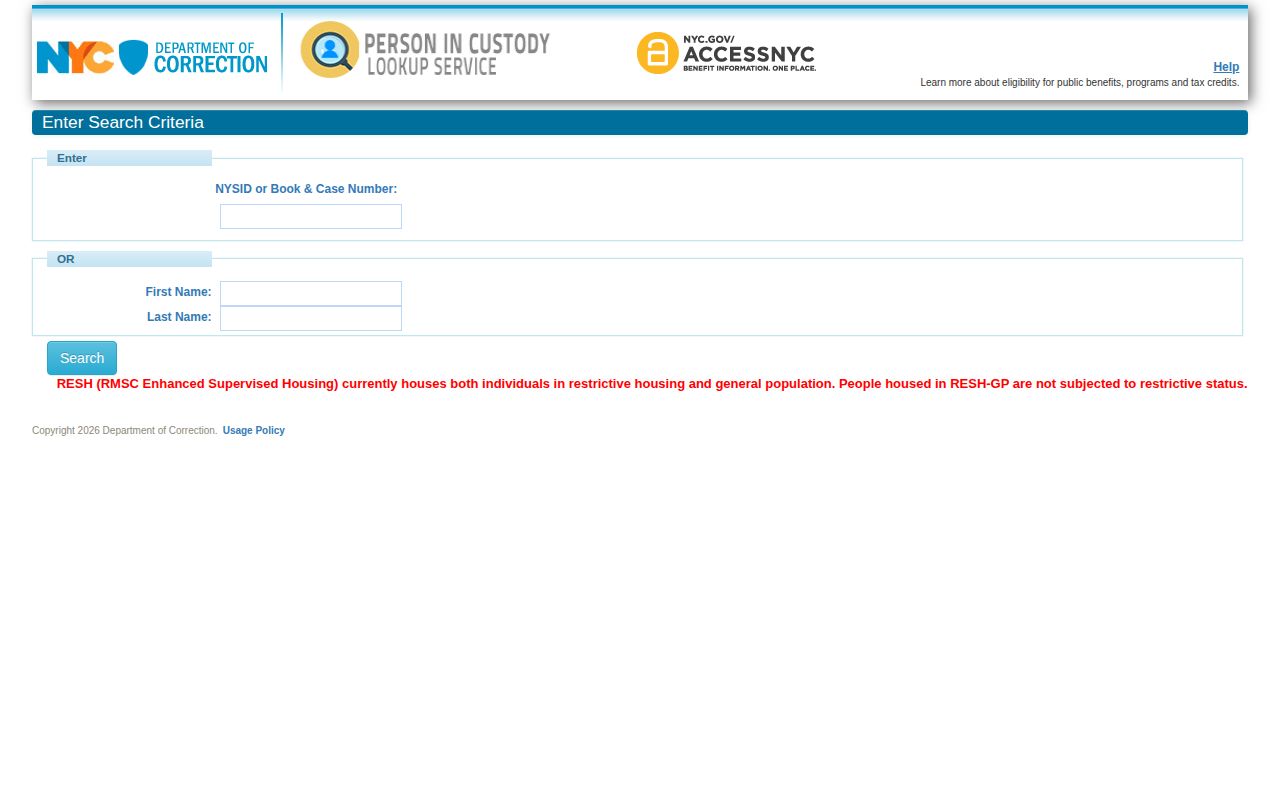
City-jail custody here runs through a text lookup. There is no booking-photo roster for New York County on the official path.
New York Busted Booking Timing
A blank search on the same day proves little. NYC311 notes that someone arrested in the past three days can still sit in police custody, and DOC's own release guidance allows two days or more before a record is entered. Outcomes vary too. A desk appearance ticket, a summons, bail, or release on recognizance can end an arrest without creating any DOC trace at all.
No fixed public refresh schedule exists. Search the live source, note when you searched, and turn to police or court channels if custody stays unclear. An older result should never be read as someone's current location, and an empty search is not evidence that no arrest happened.
New York County Arrest Data
For official arrest trends, use the NYPD Arrest Data Year to Date table and its historic dataset. Filter on ARREST_BORO=M and Manhattan comes into view. Each event row carries the arrest date, precinct, offense description, law code, and jurisdiction code. Together these show whether a case grew out of patrol, transit, housing, or another citywide function. The data is analytical, not a name lookup. That is its strength for reading patterns.
Know the limits. These are quarterly event tables. They are not a same-day booking feed. Names, photographs, booking numbers, custody status, bond, court dates, and any bridge to DOC's Book and Case Number are all absent. The ARREST_KEY serves analysis only. Use the tables to read documented event patterns rather than to match a face to a name.
The NYPD data interface is the official arrest-event source.
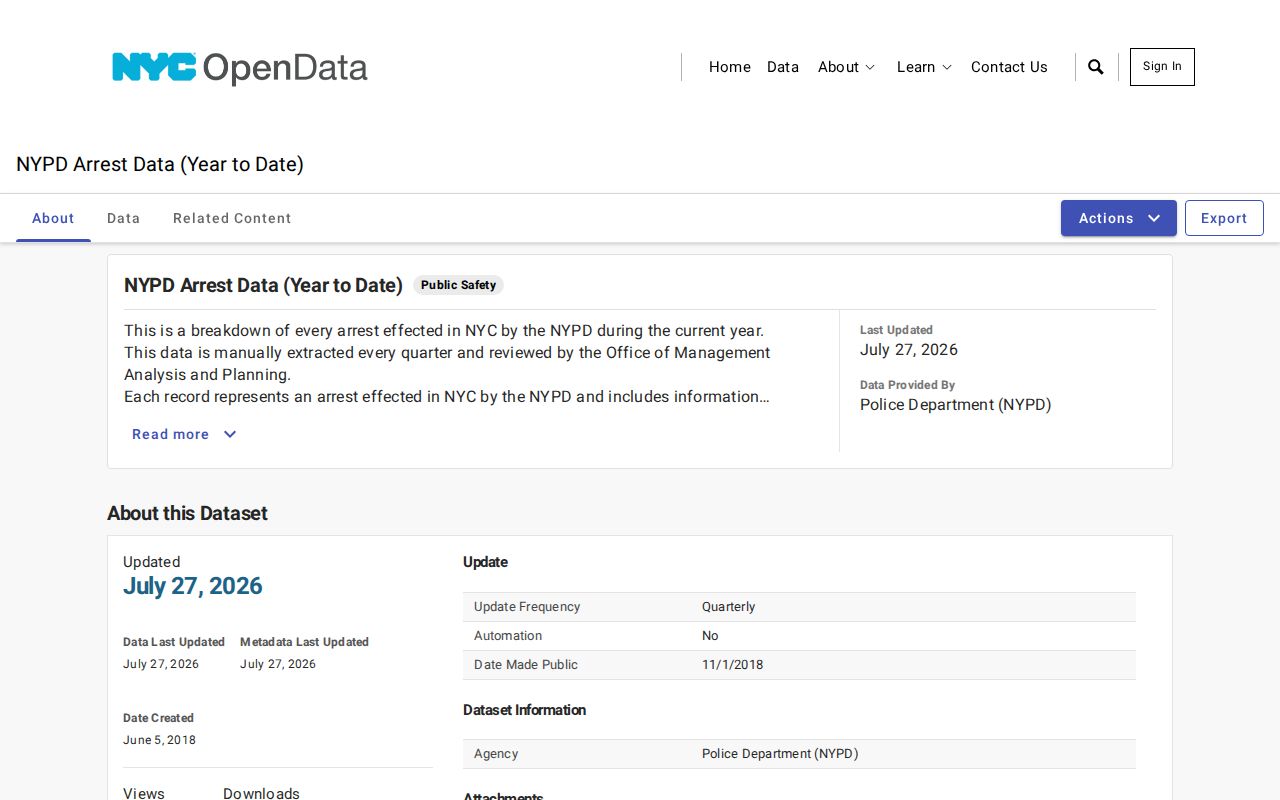
Its fields give Manhattan event context. For custody and outcomes, DOC and the courts answer those questions.
New York County Booking Feeds
No verified official booking-photo feed exists for New York County. Not hourly. Not 72-hour. Not weekly. NYPD press releases move fast on selected incidents, but they are investigative announcements, not an arrest log. DOC offers a dynamic custody search with the timing limits described above. That gap does not turn an unofficial page into a city booking source.
Tracking a multi-day question takes repetition. Re-run the DOC search for a specific person. Pull current or historic NYPD data for event context. Scan the NYPD newsroom for selected announcements. If DOC goes down, use its official contact route or file a detailed request. Remember that historical data statements never promise an archive of every day or every former arrestee.
New York Busted Release Alerts
NYC DOC VINE sends notice when someone in covered DOC custody is released or transferred. Its reach stops at the city jails. Police lockups, juvenile custody, state or federal custody, and releases via desk appearance ticket, bail, or recognizance all fall outside it, and it delivers no photos.
Other alert tools serve different masters. Notify NYC pushes emergency notices by text, email, phone, RSS, and mobile app, but it is not an arrest feed. The NYPD Crime Stoppers line takes anonymous tips and posts selected wanted material; it does no custody lookup. Match each tool to its agency and purpose before sending a city-jail question somewhere it will never be answered.
The official Notify NYC page displays the emergency-alert option.
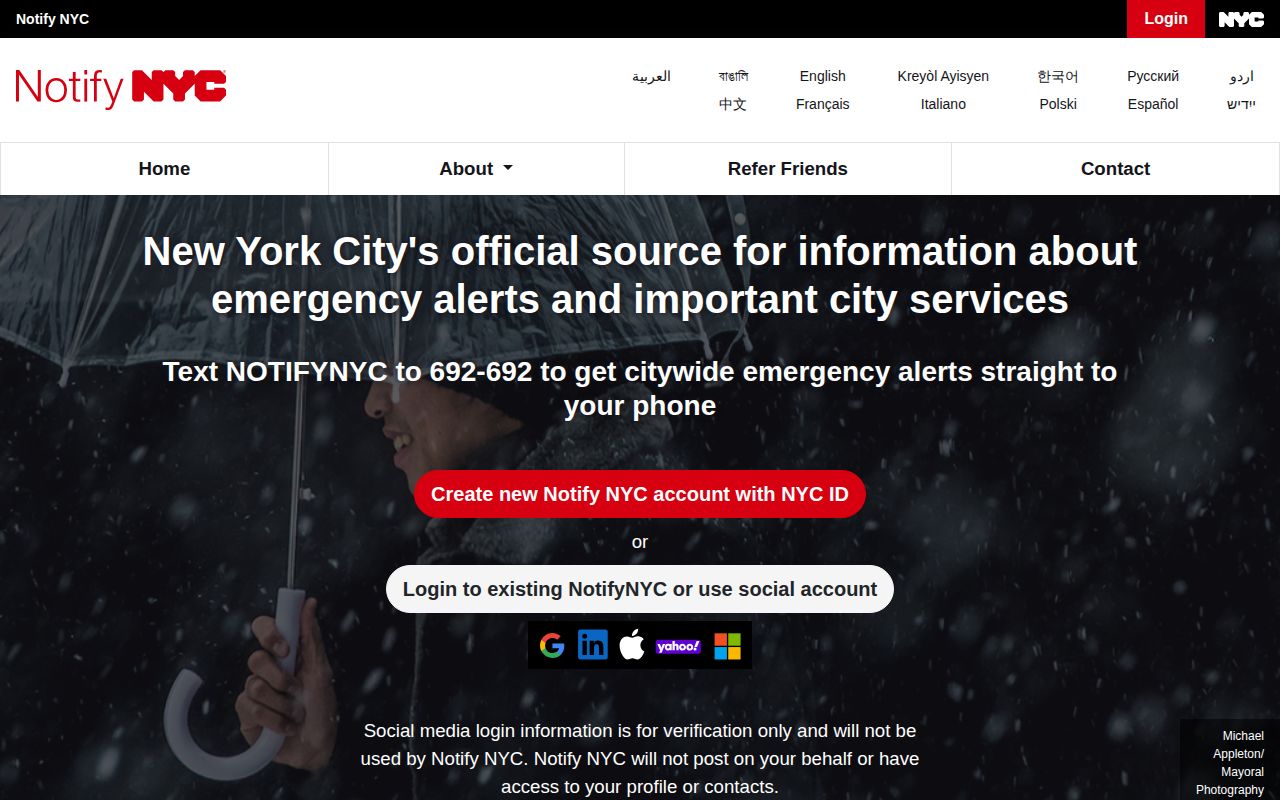
It works for city emergency messages. It will not deliver a New York County booking or mugshot alert.
New York County Court Records
A booking is where a case starts, not where it ends. DOC may list a court date and location, but that is only a schedule. Manhattan matters run through Criminal Court, or through Supreme Court once an indictment lands. The New York County FAQ walks through searching WebCriminal by defendant name. Then use New York Supreme Criminal Court to find an indictment number, part, and date for eligible matters.
Neither eCourts nor WebCriminal shows everything. Sealed matters, youthful-offender cases, files not yet entered, and other protected records can simply be missing. Need an authoritative result? Go through the clerk and the certificate of disposition process. That paper distinguishes a dismissal, an acquittal, a plea, a conviction, a sentence, or some other ending.
New York County Busted Limits
A missing online record often has a lawful cause. Juvenile matters, youthful-offender cases, sealed files, protected victims, confidential sources, and material that could hinder an investigation or a fair trial may all be withheld or redacted. Treat an empty DOC or court result as an access result. It says nothing about what did or did not happen.
- Booking
- The intake stage that creates custody-related records after an arrest.
- Arraignment
- An early court appearance where charges and release terms can be addressed.
- Disposition
- The later official court outcome.
- Sealing
- A legal restriction on access to qualifying records.
Note: New York access limits can apply even when an old copy has surfaced elsewhere.
New York County Custody Searches
DOCCS handles sentenced state-prison custody and supervision, not a fresh NYPD arrest. When the DIN is unknown, its guidance asks for a full name and birth date. Mugshots are no longer routinely provided, the agency says. Work this angle only after the city-jail and court paths, once state custody looks plausible.
Federal systems sit further out. The Bureau of Prisons locator finds BOP inmates and returns custody details, not photographs. The ICE detainee locator runs on its own scope and identifier rules. Neither confirms or rules out an ordinary Manhattan arrest. The Marshals route is no public photo roster either.
The BOP locator is a distinct federal-custody search.
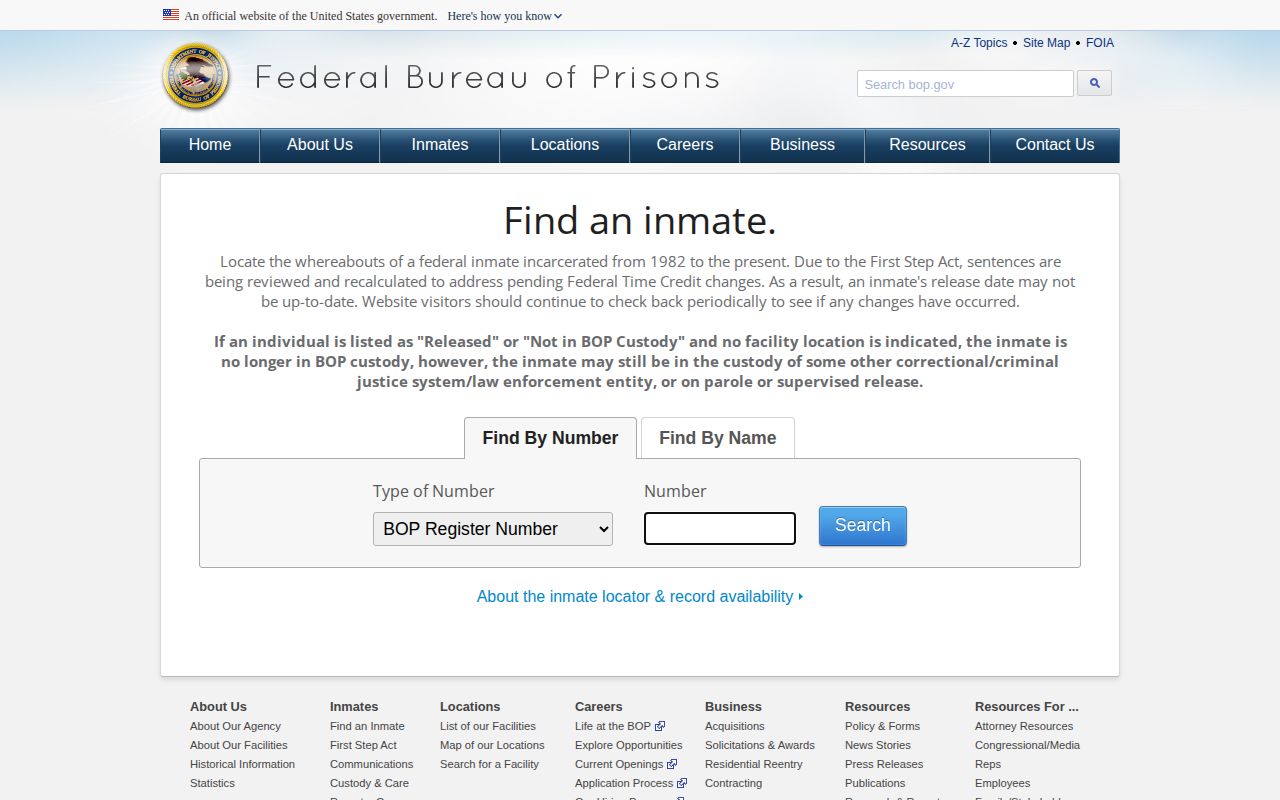
A federal locator answers a federal-custody question, not a New York County city-jail question.
New York County Busted Sources
Start with the official agencies before anything else. The Department of Correction can tell you who is in city custody right now, though no photos come with it. NYPD offers records, some press material, and arrest data stripped of names. Want to know how a case ended? That is the courts' job. Local news helps fill in color, but most of its pictures are scene shots, file photos, or images supplied by police, not a steady stream of booking pictures.
| Channel | Status | Use |
|---|---|---|
| NYC DOC lookup | Official text custody information, no mugshots | Check current or recent city-jail custody. |
| NYPD FOIL and newsroom | Official request path and selective announcements | Ask for a defined record; do not treat press as a roster. |
| New York Courts | Official case and disposition path | Use WebCriminal, the clerk, and certificate route. |
| Local reporting | Selective context and non-roster images | Check the source date and later court result. |
| Mugshots.com New York City | Historic and unofficial | Verify any listing through an official source. |
The big busted-mugshot aggregators come up empty here. Busted Newspaper, Recently Booked, Arrests.org, and Mugshots.zone have no verified New York County section. One option does exist: the Mugshots.com New York City page. It is unofficial and mostly historical. Local news stories can still help as background. Just confirm custody or court facts before relying on any of them.
New York City Busted Mugshots
New York County contains exactly one municipality: New York City. The city page walks through the NYPD-to-DOC process for Manhattan arrests. It also explains why no separate borough booking roster exists and points to the police records route. NYPD data can flag whether an event happened in Manhattan or elsewhere, but it tracks events rather than a named photo index.
For details on where the official record sits, see New York City Busted Mugshots. It puts DOC and NYPD access first, then covers news and unofficial material after those paths.
New York County Record Archives
Just because a record vanishes from a live search does not mean it was destroyed or sealed. DOC keeps historical lookup data going back to September 2005, yet it makes no promise that every entry stays public in the same form. People get released, transferred, or their files corrected and sealed. For an older record, go to the agency that created it and follow its records or archives route.
Retention and public access are two different things. The New York State Archives law-enforcement schedule sorts arrest logs, case files, identification material, and digital records into separate retention rules, but a schedule never promises that a specific record or photo can be released. For a particular request, NYPD, DOC, or the court holding the matter remains the right source. NYC Department of Records and Information Services manages city records overall, though it cannot tell you who holds an individual Manhattan case or override a sealing rule. Start with the record creator, hand over the identifier and date you know, and ask where an older record lives if the first office does not have it.
Older material needs careful source reconciliation. A DOC lookup is a custody record, an NYPD file is an arrest record, and a certificate of disposition shows the court outcome. Different stages mean different dates and labels. Never stitch them together using an old unofficial image or a stale directory entry. Check the agency, custody status, and source date before calling two references the same event.
Sealed or restricted records stay sealed no matter what archival language says. Court or agency instructions control access. The right move is the authorized court, records, or counsel path, not hunting for copied material elsewhere. When a request spans agencies, state the dates and each agency's role rather than assuming Manhattan, New York County, and New York City labels point to the same document. Each office may hold a distinct record, and its reply tells you what truly exists.